

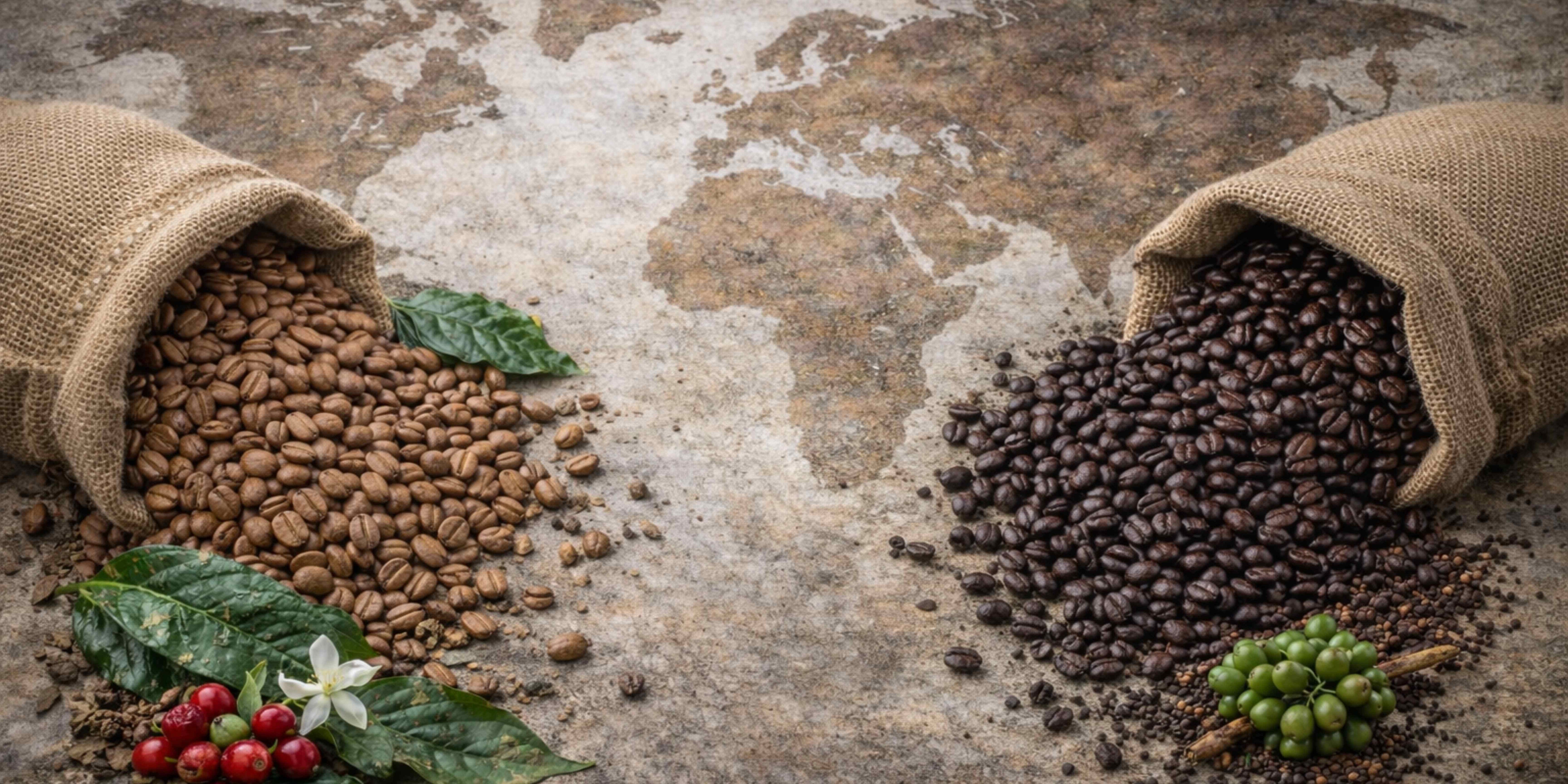
Arabica vs Robusta Coffee: What Businesses Should Know
When businesses choose coffee for offices, cafés or hospitality environments, they often encounter two main types of coffee beans: Arabica and Robusta. Understanding the difference between these varieties helps companies select coffee that matches their taste preferences, brewing equipment and daily consumption needs.
Whether coffee is served in an office pantry, meeting room or café, the type of bean influences flavour, caffeine levels and the overall coffee experience for employees and guests.
What Is Arabica Coffee?
Arabica coffee is the most widely consumed coffee variety in the world and is generally associated with higher-quality coffee.
Arabica beans grow best at higher altitudes and cooler climates, often between 800 and 2,000 meters above sea level. Many well-known coffee regions produce Arabica beans, including Brazil, Colombia, Ethiopia, Costa Rica, Guatemala and Kenya.
Arabica beans are valued for their smooth and aromatic flavour profile, often featuring notes of chocolate, fruit or caramel. They typically contain slightly less caffeine than Robusta and are commonly used in premium coffee blends.
For workplaces that want a smooth and approachable coffee experience, Arabica-based blends are often the preferred choice.
What Is Robusta Coffee?
Robusta coffee is known for its stronger flavour and higher caffeine content. The plants grow at lower altitudes and warmer climates and are generally more resilient than Arabica plants.
Major Robusta-producing regions include Vietnam, Brazil, Indonesia, Uganda and India.
Robusta coffee delivers a bold, intense flavour and fuller body, which makes it particularly suitable for espresso blends. Its higher caffeine content also contributes to the thick crema often seen in espresso.
Because of these characteristics, Robusta is frequently used in Italian-style espresso blends served in cafés and restaurants.
Arabica vs Robusta: Key Differences
| Feature | Arabica | Robusta |
|---|---|---|
| Taste | Smooth, aromatic, complex | Strong, bold |
| Caffeine | Lower | Higher |
| Acidity | Balanced | Lower |
| Crema in espresso | Moderate | Thick |
| Price | Generally higher | Generally lower |
How Often Are Arabica and Robusta Blended?
Most commercial coffee is not purely Arabica or purely Robusta. Instead, roasters often combine both varieties to balance flavour, strength and cost.
Globally, about 60–70% of coffee production consists of Arabica beans, while 30–40% is Robusta. Many professional coffee blends use a combination of the two.
Common blend ratios include:
| Blend type | Typical use |
|---|---|
| 100% Arabica | Premium coffee, specialty cafés and offices that prefer smoother flavour |
| 80% Arabica / 20% Robusta | Balanced espresso blends with added crema |
| 60–70% Arabica / 30–40% Robusta | Common commercial blends used in cafés, restaurants and offices |
| 100% Robusta | Strong coffee or instant coffee products |
By blending both beans, roasters can create coffee that delivers balanced flavour, reliable strength and consistent crema in professional coffee machines.
Which Coffee Is Best for Businesses?
The best choice depends on the environment and how coffee is served.
Offices
Many offices prefer smoother blends with a higher proportion of Arabica beans, as these tend to appeal to a wide range of tastes.
Cafés and Restaurants
Hospitality venues often use espresso blends that include Robusta to create stronger flavour and a richer crema.
Maritime Industry and Ship Supply
In maritime environments such as vessels, offshore platforms and ship operations, coffee solutions often prioritise reliability and ease of preparation. Capsule systems or robust espresso blends are frequently chosen because they provide consistent quality and are easy to manage in high-demand environments.
Convenience-focused environments
Businesses that prioritise speed and consistency often use capsule systems or blends designed for automatic coffee machines.
Conclusion
Arabica and Robusta coffee beans each bring distinct characteristics to the cup. Arabica beans offer smooth and aromatic flavours, while Robusta provides strength, higher caffeine levels and rich crema.
Many professional coffee blends combine both varieties to create a balanced and consistent coffee experience. Understanding these differences helps businesses choose coffee that suits their workplace, customers and coffee equipment.
